Nanotech Viruses In Food

It’s very disturbing when big corporations plans new ideas without any public approval. One of this is how they want to change our food with genetic modifications and with nanotechnology. I think it’s very dangerous and should be studied a lot more than they are doing. Here’s something about nanotech in our food:

Agency Approves First Use of Viruses as a Food Additive
By THE ASSOCIATED PRESS
Published: August 19, 2006

WASHINGTON, Aug. 18 (AP) ? A mix of bacteria-killing viruses may be sprayed on cold cuts, wieners and sausages to combat common microbes that kill hundreds of people a year, federal health officials ruled Friday.

The ruling, by the Food and Drug Administration, is the first approval of viruses as a food additive, said Andrew Zajac of the Office of Food Additive Safety at the agency. Treatments that use bacteriophages to attack harmful bacteria have been a part of folk medicine for hundreds of years in India and for decades in the former Soviet Union.

The approved mix of six viruses is intended to be sprayed onto ready-to-eat meat and poultry products, including sliced ham and turkey, said John Vazzana, the president and chief executive of Intralytix, which developed the additive.

The viruses, called bacteriophages, are meant to kill strains of the Listeria monocytogenes bacterium, the food agency said. The bacterium can cause a serious infection called listeriosis, primarily in pregnant women, newborns and adults with weakened immune systems. In the United States, an estimated 2,500 people become seriously ill with listeriosis each year, according to the federal Centers for Disease Control and Prevention. Of those, 500 die.

Luncheon meats are particularly vulnerable to Listeria because after they are bought they are typically not cooked or reheated, which can kill harmful bacteria like Listeria, Mr. Zajac said.

The preparation of bacteriophages – the name is from the Greek for ‘bacteria eater’ – attacks only strains of the Listeria bacterium and not human or plant cells, the food agency said.

“As long as it used in accordance with the regulations, we have concluded it’s safe,” Mr. Zajac said.

People normally come into contact with bacteriophages through food, water and the environment, and they are found in our digestive tracts, the agency said.

Consumers will not be aware which meat and poultry products have been treated with the spray, Mr. Zajac said. The Department of Agriculture will regulate the actual use of the product.

The viruses are grown in a preparation of the very bacteria they kill, and then purified. The food agency had concerns that the virus preparation could contain toxic residues from the bacteria, but testing did not reveal residues, which in small quantities are not likely to cause health problems anyway, the agency said.

“The F.D.A. is applying one of the toughest food-safety standards which they have to find this is safe,” said Caroline Smith DeWaal, director of food safety for the Center for Science in the Public Interest, a consumer advocacy group. “They couldn’t approve this product if they had questions about its safety.”

Intralytix, based in Baltimore, first petitioned the food agency in 2002 to allow the viruses to be used as an additive. It has since licensed the product to a multinational company, which intends to market it worldwide, Mr. Vazzana said.

N.Y. Times Cites Consumers Union & OCA

Nanotech Food is Ten Times Scarier Than Genetically Engineered
Engineering Food at Level of Molecules
By Barnaby J. Feder
The New York Times, Oct 10, 2006
Straight to the Source

What if the candy maker Mars could come up with an additive to the coating of its M&M’s and Skittles that would keep them fresher longer and inhibit melting? Or if scientists at Unilever could shrink the fat particles (and thereby the calories) in premium ice cream without sacrificing its taste and feel?


Tastes Like Nanotechnology
These ideas are still laboratory dreams. The common thread in these research projects and in product development at many other food companies is nanotechnology, the name for a growing number of techniques for manipulating matter in dimensions as small as single molecules.

Food companies remain wary of pushing the technology – which is named for the nanometer, or a billionth of a meter – too far and too fast for safety-conscious consumers. But they are tantalized by nanotechnology’s capacity to create valuable and sometimes novel forms of everyday substances, like food ingredients and packaging materials, simply by reducing them to sizes that once seemed unimaginable.

Most of the hoopla and a lot of the promise for nanotechnology lies in other industries, including electronics, energy and medicine. But the first generation of nanotechnology-based food industry products, including synthetic food colorings, frying oil preservatives and packaging coated with antimicrobial agents, has quietly entered the market.

The commercial uses of the technology now add up to a $410 million sliver of the $3 trillion global food market, according to Cientifica, a British market research firm that specializes in nanotechnology coverage. Cientifica forecasts that nanotechnology’s share will grow to $5.8 billion by 2012, as other uses for it are developed.

Mindful of the adverse reaction from some consumers over the introduction of genetically engineered crops, the food industry hopes regulators will come up with supportive guidelines that will also allay consumers’ fears. That has put a spotlight on the Food and Drug Administration’s first public hearing today on how it should regulate nanotechnology, with a portion of the agenda specifically about food and food additives. No policy changes are expected this year.

“To their credit, the F.D.A. is trying to get a handle on what’s out there,” said Michael K. Hansen, senior scientist at Consumers Union, one of 30 groups that have signed up to speak at the meeting.

But coping with nanotechnology will be a daunting challenge for the agency, according to a report last week by a former senior F.D.A. official, whose analysis was sponsored by the Pew Charitable Trusts and the Woodrow Wilson International Center for Scholars, a Washington policy group. Michael R. Taylor, a former deputy commissioner for policy at the agency, said the F.D.A. lacked the resources and, in the case of cosmetics, dietary supplements and food, the full legal authority needed to protect consumers and also foster innovation.

Industry representatives and analysts are worried that nanotechnology will suffer the same fate as genetic engineering, which was quickly embraced as a breakthrough for drug makers but has been fiercely opposed, especially in Europe, when used in crops, fish and livestock.

Many of the same groups fighting genetic engineering in agriculture have been arguing for regulators to clamp down on nanotechnology, in general, and its use in food and cosmetics, in particular, until more safety testing has been completed.

“I’m amazed at how far it’s gone already,” said Ronnie Cummins, director of the Organic Consumers [Association], an advocate for organic products based in Finland, Minn. “Compared to nanotechnology, I think the threat of genetic engineering is tame.”

So far, there have been no confirmed reports of public health or environmental problems related to nanotechnology. But troubling laboratory tests suggest some nanoscale particles may pose novel health risks by, for instance, slipping easily past barriers to the brain that keep larger particles out. Thus, the same attributes that could make the technology valuable for delivering drugs could also make it hazardous.

More important, everyone agrees that there have been few rigorous studies of the actual behavior of the newly engineered nanoscale materials in humans and the environment. Those that have been completed fall far short of duplicating the range of conditions the nanoparticles would encounter in general commerce. And few laboratory studies have focused on the fate of particles that are eaten rather than inhaled or injected.

“Lack of evidence of harm should not be a proxy for reasonable certainty of safety,” the Consumers Union said in testimony submitted to the F.D.A. for today’s meeting. The language was carefully chosen.

“Reasonable certainty of safety” is what food companies must demonstrate to the F.D.A. before they can introduce a new food additive.

The Consumers Union and some other groups are suggesting that the agency automatically classify all new nanoscale food ingredients, including those now classified as safe in larger sizes, as new additives. And they want the same standards extended to cover food supplement companies, some of which have been marketing traditional herbal and mineral therapies in what they say are new nanoscale forms that increase their effectiveness. Some are also calling for mandatory labeling of products with synthetic nanoscale ingredients, no matter how small the quantity.

F.D.A. officials said last week that treating every new nanotechnology product that consumers swallow as a food additive might compromise the agency’s mandate to foster innovation and might not be within its authority. Such a move would also be hobbled by the lack of agreement on safety testing standards for the wide range of nanoscale innovations in the pipeline. In addition, the agency lacks the staff to handle that scale of oversight.

“That would be a sea change for us,” said Laura Tarantino, director of the F.D.A.’s Office of Food Additive Safety.

Simply defining nanotechnology may also be a hurdle. BASF has been widely considered a pioneer for products like its synthetic lycopene, an additive that substitutes for the natural lycopene extracted from tomatoes and other fruits. Lycopene, widely used as a food coloring, is increasingly valued for its reported heart and anticancer benefits. But BASF’s particles average 200 to 400 nanometers in diameter, about the same as the natural pigment, and well above the 100-nanometer threshold that many experts consider true nanotechnology.

Unilever has never disclosed the dimensions of its shrunken fat particles. Trevor Gorin, a Unilever spokesman in Britain, said in an e-mail message that reports about the project have been misleading.

Given the uncertainty about the risks of consuming new nano products, many analysts expect near-term investment to focus on novel food processing and packaging technology. That is the niche targeted by Sunny Oh, whose start-up company, OilFresh, based in Sunnyvale, Calif., is marketing a novel device to keep frying oil fresh. OilFresh grinds zeolite, a mineral, into tiny beads averaging 20 nanometers across and coats them with an undisclosed material. Packed into a shelf inside the fryer, the beads interfere with chemical processes that break down the oil or form hydrocarbon clusters, Mr. Oh says. As a result, restaurants can use oil longer and transfer heat to food at lower temperatures, although they still need traditional filters to remove food waste from the oil.

Mr. Oh said OilFresh will move beyond restaurants into food processing by the end of the month, when it delivers a 1,000-ton version of the device to a “midsized potato chip company” that he said did not want to be identified.

The desire to avoid controversy has made even the largest food companies, like Kraft Foods, leery about discussing their interest in nanotechnology. Kraft, the second-largest food processor after Nestle, was considered the industry’s nanotechnology pacesetter in 2000. That is when it announced the founding of an international alliance of academic researchers and experts at government labs to pursue basic research in nanotechnology sponsored by Kraft.

The Nanotek Consortium, as Kraft called the group, produced a number of patents for the company, but Kraft pulled back from its high-profile connection with nanotechnology two years ago. Manuel Marquez, the research chemist Kraft appointed to organize the consortium, moved to Philip Morris USA, a sister subsidiary of Altria that now sponsors the consortium under a new name – the Interdisciplinary Network of Emerging Science and Technologies.

Kraft still sends researchers to industry conferences to make what it calls “generic” presentations about the potential uses of nanotechnology in the food industry. But the company declines to specify its use of or plans for the technology.

F.D.A. officials say companies like Kraft are voluntarily but privately providing them with information about their activities. But many independent analysts say the level of disclosure to date falls far short of what will be needed to create public confidence.

“Most of the information is in companies and very little is published,” said Jennifer Kuzma, an associate director of the Center for Science, Technology, and Public Policy at the University of Minnesota, who has been tracking reports of nanotechnology use in food and agriculture.

U.S. FDA Told to Watch Nanotech Products for Risks
By Lisa Richwine

Reuters
October 11, 2006


BETHESDA, Md. — The growing number of cosmetics, drugs other products made using nanotechnology need more attention from U.S. regulators to make sure they are safe for humans and the planet, consumer and environmental groups told a government hearing Tuesday.

Nanotechnology is the design and use of particles as small as one-billionth of a meter. A human hair, by contrast, is about 80,000 nanometers across. Materials at nano-size can have completely different properties from larger versions, such as unusual strength or the ability to conduct electricity.

Witnesses at a meeting called by the U.S. Food and Drug Administration agreed nanotechnology holds promise for a vast range of products, including new medicines to treat diseases or delivery systems to get drugs to body parts now hard to reach.

But some complained that dozens of cosmetics and a handful of drugs made with nanomaterials already have made it to the market while regulators have done little to track their use or safety.

“Unfortunately, so far the U.S. government has acted as a cheerleader, not a regulator, in addressing the nanotech revolution. Health and environmental effects have taken a back seat,” said Kathy Jo Wetter of ETC Group, an organization that tracks the impact of new technologies.

The FDA has treated products made with nanotechnology the same way it handles others. For drugs with nanomaterials, that means companies must provide evidence of safety and effectiveness before they reach the market. But cosmetics, foods and dietary supplements are not subject to FDA oversight before they are sold — with or without nanoparticles.

While no harm has been documented, concerns have arisen that the tiny particles are unpredictable and could have unforeseen impacts in the human body or in the environment.

As they called for close FDA oversight, many experts said they felt the agency was ill-equipped to regulate the new technology in the midst of other responsibilities.

“New nano-enabled drugs and medical devices … place burdens on an oversight agency that is already stretched extremely thin,” said David Rejeski, director of the Project on Emerging Nanotechnologies, a group aimed at helping society anticipate and manage effects of nanotechnology.

The FDA has created an internal task force on nanotechnology, and officials said they called the meeting to learn what scientific issues the agency should address.

The task force is due to report to the commissioner in nine months, said Dr. Randall Lutter, FDA’s associate commissioner for policy and planning.

“It’s not only the risks, it’s also looking at the potential. There’s a lot of opportunity… to bring great things to patients,” he said at the meeting.

Industry groups and some other experts urged the agency not to overreact.

“The key is to manage the risk while achieving the maximum benefit from these materials. It would be wrong for us to over-regulate,” said Martin Philbert of the University of Michigan School of Public Health.


Engineering Food at Level of Molecules

The New York Times

Published: October 10, 2006

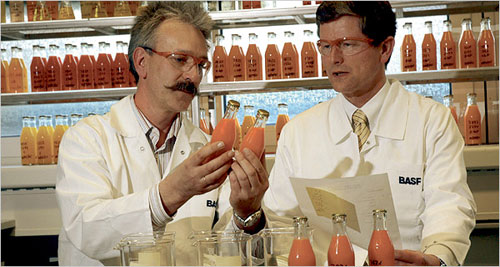
At the BASF Beverage Lab in Ludwigshafen, Germany, Andreas Hasse, left, and Clemes Sambale

assess drinks that were made with synthetic beta-carotene, a nanoparticle used to add color and health benefits.

What if the candy maker Mars could come up with an additive to the coating of its M&M’s and Skittles that would keep them fresher longer and inhibit melting? Or if scientists at Unilever could shrink the fat particles (and thereby the calories) in premium ice cream without sacrificing its taste and feel?

These ideas are still laboratory dreams. The common thread in these research projects and in product development at many other food companies is nanotechnology, the name for a growing number of techniques for manipulating matter in dimensions as small as single molecules.

Food companies remain wary of pushing the technology — which is named for the nanometer, or a billionth of a meter — too far and too fast for safety-conscious consumers. But they are tantalized by nanotechnology’s capacity to create valuable and sometimes novel forms of everyday substances, like food ingredients and packaging materials, simply by reducing them to sizes that once seemed unimaginable.

Most of the hoopla and a lot of the promise for nanotechnology lies in other industries, including electronics, energy and medicine. But the first generation of nanotechnology-based food industry products, including synthetic food colorings, frying oil preservatives and packaging coated with antimicrobial agents, has quietly entered the market.

The commercial uses of the technology now add up to a $410 million sliver of the $3 trillion global food market, according to Cientifica, a British market research firm that specializes in nanotechnology coverage. Cientifica forecasts that nanotechnology’s share will grow to $5.8 billion by 2012, as other uses for it are developed.

Mindful of the adverse reaction from some consumers over the introduction of genetically engineered crops, the food industry hopes regulators will come up with supportive guidelines that will also allay consumers’ fears. That has put a spotlight on the Food and Drug Administration’s first public hearing today on how it should regulate nanotechnology, with a portion of the agenda specifically about food and food additives. No policy changes are expected this year.

“To their credit, the F.D.A. is trying to get a handle on what’s out there,” said Michael K. Hansen, senior scientist at Consumers Union, one of 30 groups that have signed up to speak at the meeting.

But coping with nanotechnology will be a daunting challenge for the agency, according to a report last week by a former senior F.D.A. official, whose analysis was sponsored by the Pew Charitable Trusts and the Woodrow Wilson International Center for Scholars, a Washington policy group. Michael R. Taylor, a former deputy commissioner for policy at the agency, said the F.D.A. lacked the resources and, in the case of cosmetics, dietary supplements and food, the full legal authority needed to protect consumers and also foster innovation.

Industry representatives and analysts are worried that nanotechnology will suffer the same fate as genetic engineering, which was quickly embraced as a breakthrough for drug makers but has been fiercely opposed, especially in Europe, when used in crops, fish and livestock.

Many of the same groups fighting genetic engineering in agriculture have been arguing for regulators to clamp down on nanotechnology, in general, and its use in food and cosmetics, in particular, until more safety testing has been completed.

“I’m amazed at how far it’s gone already,” said Ronnie Cummins, director of the Organic Consumers Group, an advocate for organic products based in Finland, Minn. “Compared to nanotechnology, I think the threat of genetic engineering is tame.”

So far, there have been no confirmed reports of public health or environmental problems related to nanotechnology. But troubling laboratory tests suggest some nanoscale particles may pose novel health risks by, for instance, slipping easily past barriers to the brain that keep larger particles out. Thus, the same attributes that could make the technology valuable for delivering drugs could also make it hazardous.

More important, everyone agrees that there have been few rigorous studies of the actual behavior of the newly engineered nanoscale materials in humans and the environment. Those that have been completed fall far short of duplicating the range of conditions the nanoparticles would encounter in general commerce. And few laboratory studies have focused on the fate of particles that are eaten rather than inhaled or injected.

“Lack of evidence of harm should not be a proxy for reasonable certainty of safety,” the Consumers Union said in testimony submitted to the F.D.A. for today’s meeting. The language was carefully chosen.

“Reasonable certainty of safety” is what food companies must demonstrate to the F.D.A. before they can introduce a new food additive.

The Consumers Union and some other groups are suggesting that the agency automatically classify all new nanoscale food ingredients, including those now classified as safe in larger sizes, as new additives. And they want the same standards extended to cover food supplement companies, some of which have been marketing traditional herbal and mineral therapies in what they say are new nanoscale forms that increase their effectiveness. Some are also calling for mandatory labeling of products with synthetic nanoscale ingredients, no matter how small the quantity.

F.D.A. officials said last week that treating every new nanotechnology product that consumers swallow as a food additive might compromise the agency’s mandate to foster innovation and might not be within its authority. Such a move would also be hobbled by the lack of agreement on safety testing standards for the wide range of nanoscale innovations in the pipeline.

In addition, the agency lacks the staff to handle that scale of oversight.

“That would be a sea change for us,” said Laura Tarantino, director of the F.D.A.’s Office of Food Additive Safety.

Simply defining nanotechnology may also be a hurdle. BASF has been widely considered a pioneer for products like its synthetic lycopene, an additive that substitutes for the natural lycopene extracted from tomatoes and other fruits. Lycopene, widely used as a food coloring, is increasingly valued for its reported heart and anticancer benefits. But BASF’s particles average 200 to 400 nanometers in diameter, about the same as the natural pigment, and well above the 100-nanometer threshold that many experts consider true nanotechnology.

Unilever has never disclosed the dimensions of its shrunken fat particles. Trevor Gorin, a Unilever spokesman in Britain, said in an e-mail message that reports about the project have been misleading.

Given the uncertainty about the risks of consuming new nano products, many analysts expect near-term investment to focus on novel food processing and packaging technology. That is the niche targeted by Sunny Oh, whose start-up company, OilFresh, based in Sunnyvale, Calif., is marketing a novel device to keep frying oil fresh. OilFresh grinds zeolite, a mineral, into tiny beads averaging 20 nanometers across and coats them with an undisclosed material. Packed into a shelf inside the fryer, the beads interfere with chemical processes that break down the oil or form hydrocarbon clusters, Mr. Oh says. As a result, restaurants can use oil longer and transfer heat to food at lower temperatures, although they still need traditional filters to remove food waste from the oil.

Mr. Oh said OilFresh will move beyond restaurants into food processing by the end of the month, when it delivers a 1,000-ton version of the device to a “midsized potato chip company” that he said did not want to be identified.

The desire to avoid controversy has made even the largest food companies, like Kraft Foods, leery about discussing their interest in nanotechnology. Kraft, the second-largest food processor after Nestlé, was considered the industry’s nanotechnology pacesetter in 2000. That is when it announced the founding of an international alliance of academic researchers and experts at government labs to pursue basic research in nanotechnology sponsored by Kraft.

The Nanotek Consortium, as Kraft called the group, produced a number of patents for the company, but Kraft pulled back from its high-profile connection with nanotechnology two years ago. Manuel Marquez, the research chemist Kraft appointed to organize the consortium, moved to Philip Morris USA, a sister subsidiary of Altria that now sponsors the consortium under a new name — the Interdisciplinary Network of Emerging Science and Technologies.

Kraft still sends researchers to industry conferences to make what it calls “generic” presentations about the potential uses of nanotechnology in the food industry. But the company declines to specify its use of or plans for the technology.

F.D.A. officials say companies like Kraft are voluntarily but privately providing them with information about their activities. But many independent analysts say the level of disclosure to date falls far short of what will be needed to create public confidence.

“Most of the information is in companies and very little is published,” said Jennifer Kuzma, an associate director of the Center for Science, Technology, and Public Policy at the University of Minnesota, who has been tracking reports of nanotechnology use in food and agriculture.


Open Letter to the FDA to Stop Corporations from Lacing Foods, Body Care Products, & Supplements with Dangerous Nanoparticles
By Ronnie Cummins, National Director
Organic Consumers Association

Sept 23, 2006

Acting FDA Commissioner Andrew C. Von Eschenbach
Division of Dockets Management (HFA-305)
Food and Drug Administration
5630 Fishers Lane, Room 1061
Rockville, MD 20852

Dear Commissioner Von Eschenbach,

I write to express my serious concerns about the FDA’s regulatory oversight of nanomaterials in consumer products. Many consumer products containing engineered nanomaterials are already available on U.S. market shelves, including food and food packaging products.

Millions of dollars are being spent by government and industry to apply nanotechnology in areas of food processing, food packaging, and agricultural production. Current nano-food products on the market include a canola oil, a chocolate “slim” shake, a nano-bread, and several nano-food additives and supplements used in soft drinks, lemonades, fruit juices, and margarines. Many food packaging products use nano-composites, nano-clays, and nano-coatings. In addition, if industry observers are correct, hundreds of more new food and agriculture products are under development and many could be on the market in as few as two years. By 2010 the nano-food market will be $20 billion. Many of the world’s leading food companies – including H.J. Heinz, Nestle, Hershey, Unilever, and Kraft – are investing heavily in nanotechnology applications.

Scientists have found that the fundamental properties of matter can change at the nano-scale, creating physical and chemical properties distinct from those of the same material in bulk form. We know that the new properties of nanomaterials create new risks, like enhanced toxicity. Studies have raised numerous red flags, and many types of nanoparticles have proven to be toxic to human tissue and cells.

Nanoparticles can gain assess to the blood stream following ingestion. Once inside the body, the super-tiny size of these materials gives them unprecedented mobility and access to the human body; they can access cells, tissues, and organs that larger particles cannot. The length of time that nanoparticles remain in organs and what dose may cause harmful effects remains unknown.

It does not appear that FDA is ready for this wave of nano-food products. I am very concerned about the rapid introduction of these potentially hazardous nanomaterials into our bodies and into our environment without adequate scientific study to ensure that we understand their risks and can prevent harm occurring to people and the environment. The FDA’s failure to undertake or review new testing of these nanomaterials despite these known and foreseeable dangers suggests the agency’s review process is not acting to ensure consumer health and safety.

For these reasons, I strongly request that FDA use its upcoming Public Meeting and its new Nanotechnology Task Force to discuss the human health and environmental risks presented by nanomaterials in consumer products, including food and food packaging products. FDA should act quickly to shore up its regulation of these substances to account for their fundamentally different properties and their associated dangers, including require new nano-specific testing and the labeling of all nanomaterial products, including nano-food products.

Currently, FDA’s reliance on manufacturers’ assurances of safety make me and my family into guinea pigs. FDA must instead independently review all testing and assess the safety of these products as well as force manufacturers to label their nanomaterial products. Only with labeling can I make educated decisions about what I buy and put in and on my body. Until such actions are taken, I fully support a moratorium on the manufacture of nanomaterial consumer products and the recall of products currently on the market.

Ronnie Cummins
National Director
Organic Consumers Association
Finland, Minnesota 55603


FDA not ‘nano-ready’, says report
By Clarisse Douaud
10/5/2006

A former FDA deputy commissioner for policy has denounced the agency’s capacity to properly regulate nanotechnology products including supplements, a criticism that could inflame debate leading up to the agency’s first major public meeting on the atomic technology.

In a report commissioned by the Woodrow Wilson Center’s project on emerging nanotechnologies, University of Maryland School of Medicine professor Michael Taylor concluded the US Food & Drug Administration’s resource base is severely eroded. This is despite what appears to be a recent nanotechnology policy kick-start at the FDA.


The report reveals regulatory weaknesses affecting new products, such as certain dietary supplements and cosmetics, using the technology. Critics say questions over nanotechnology safety have not been answered and the FDA is not in a position to effectively police it.

“Unless the FDA addresses potential nanotechnology risks now, public confidence in a host of valuable nanotechnology-based products could be undermined,” wrote Taylor, who was deputy commissioner for policy at the Food and Drug Administration from 1991 to 1994 and currently conducts research on policy, resource, and institutional issues affecting public health agencies.

Nanotechnology is the ability to control things at an atomic and molecular scale of between one and 100 nanometers and has been met with enthusiasm across a variety of industries. Critics highlight the murky area of how nanoparticles affect toxicity and say the particles should be treated as new, potentially harmful materials and tested for safety accordingly.

“There are important gaps in FDA’s legal authority that hamper its ability to understand and manage nanotechnology’s potential risks,” wrote Taylor. “This is particularly true in the area of cosmetics and dietary supplements, and in the oversight of products after they reach the marketplace.”

Unlike pharmaceuticals, which must go through a series of pre-market approvals, finished dietary supplements need no pre-market approval. Under the Dietary Supplement Health and Education Act (DSHEA), which is part of the Food and Cosmetics Act, only ingredients not marketed in the US before October 1994 must be approved by FDA before use in consumer products.

Thus, as it stands, pre-market regulation of nanotechnology in dietary supplements does not fall under FDA’s regulatory umbrella, nor – according to Taylor – can it fit into the agency’s budget.

But Taylor points out in the report that the FDA is restricted in what it can do due to a dire lack of funding under the current administration. In order to continue activities mandated in 1996, FDA’s 2006 budget would have to increase by 49 percent, according to Taylor, and under President Bush’s 2007 FDA budget this funding gap will grow to 56 percent.

“But FDA’s lack of ‘nano-readiness’ is about more than dollars,” said Taylor.

“Business and health leaders alike should join in ensuring that FDA has the scientific tools and knowledge it needs to say ‘yes’ to safe and effective new products,” said Taylor.

The market stands to benefit from nanotechnology and therefore also stands to lose a lot, according to Taylor, if it is not thoroughly regulated.

In 2005, nanotechnology was incorporated into more than $30bn in manufactured goods, according to Lux Research, almost double the previous year. The market analyst projects that by 2014, 15 percent of all global manufactured goods will incorporate nanotechnology.

The Washington, DC-based Woodrow Wilson International Center for Scholars initiated its project on emerging nanotechnologies in 2005 with the aim of helping business, government and the public manage possible implications of the technology.

FDA’s nanotechnology public meeting will take place October 10, 2006 in Bethesda, Maryland.

According to FDA, the purpose of the meeting is to help the agency in its understanding of developments in nanotechnology materials relating to FDA-regulated products.

“FDA is interested in learning about the kinds of new nanotechnology material products under development in the areas of foods (including dietary supplements), food and color additives, animal feeds, cosmetics, drugs and biologics, and medical devices…” states an online FDA notice for the upcoming meeting.


Nanotechnology Risks Unknown
Insufficient Attention Paid to Potential Dangers, Report Says
By Rick Weiss
Washington Post Staff Writer
Tuesday, September 26, 2006; Page A12

The United States is the world leader in nanotechnology — the newly blossoming science of making incredibly small materials and devices — but is not paying enough attention to the environmental, health and safety risks posed by nanoscale products, says a report released yesterday by the independent National Research Council.

If federal officials, business leaders and others do not devise a plan to fill the gaps in their knowledge of nanotech safety, the report warns, the field’s great promise could evaporate in a cloud of public mistrust.

“There is some evidence that engineered nanoparticles can have adverse effects on the health of laboratory animals,” the congressionally mandated report said, echoing concerns raised by others at a House hearing last week. Until the risks are better understood, “it is prudent to employ some precautionary measures to protect the health and safety of workers, the public, and the environment.”

The 176-page report, “A Matter of Size,” was prepared under the auspices of the National Academies, chartered to advise Congress on matters of science. It focuses on the National Nanotechnology Initiative, which coordinates and prioritizes federal research in nanotechnology — the fledgling but potentially revolutionary science that deals with materials as small as a billionth of a meter.

At that size, even conventional substances behave in unconventional ways. Some materials that do not conduct electricity or are fragile, for example, are excellent conductors and are extremely strong when made small enough. But nanoparticles can also enter human cells and trigger chemical reactions in soil, interfering with biological and ecological processes.

The report concludes that the U.S. research effort is vibrant and almost certainly the strongest in the world, though a few other countries are close behind. Among the more important unmet needs, it says, is stronger collaboration with the departments of Education and Labor to boost the supply of scientists and technicians with the skills the sector needs.

The report’s concerns about the lack of a federal focus on nanotech health and safety were foreshadowed at a House Science Committee hearing Thursday at which Republicans and Democrats alike took the Bush administration to task over the lack of a plan to learn more about nanotech’s risks.

Committee Chairman Sherwood L. Boehlert (R-N.Y.) accused the administration of “sauntering” toward solutions “at a time when a sense of urgency is required.”

Ranking Democrat Bart Gordon (Tenn.) went further, calling the administration’s latest summary of nanotech research needs, released at the hearing, “a very juvenile piece of work.”

Andrew Maynard, chief science adviser for the Project on Emerging Nanotechnologies, funded in part by the Smithsonian Institution, said the government is spending about $11 million a year on nanotechnology’s potential harms when industry and environmental groups have jointly called for at least $50 million to $100 million a year. Equally important, Maynard said, is the need for a coordinated strategy to spend that money wisely.

About 300 consumer products already contain nanoscale ingredients, Maynard said, including several foods and many cosmetics, with little or no research to document their safety.

The industry is expected to be worth about $2 trillion by 2014.

Norris Alderson, associate commissioner for science at the Food and Drug Administration and chairman of the working group that created the administration’s summary research plan presented to Congress last week, said the document — which was supposed to be delivered six months ago — was meant as “a first step.” Asked by Boehlert if he understood that much more is expected of him and his working group, Alderson responded:

“I think your message is loud and clear.”
Source

An Overview of Nanotechnology

Many of us have heard about nanotechnology, but what does it mean? When we are talking for example about chemtrails it’s very important to understand nanotechnology and it’s capabilities. So here’s an overview of nanotechnology:

gold-nanotech-2

Image source

An Overview of Nanotechnology
Adapted by J.Storrs Hall from papers by Ralph C. Merkle and K. Eric Drexler

INTRODUCTION

Nanotechnology is an anticipated manufacturing technology giving thorough, inexpensive control of the structure of matter. The term has sometimes been used to refer to any technique able to work at a submicron scale; Here on sci.nanotech we are interested in what is sometimes called molecular nanotechnology, which means basically “A place for every atom and every atom in its place.” (other terms, such as molecular engineering, molecular manufacturing, etc. are also often applied).

Molecular manufacturing will enable the construction of giga-ops computers smaller than a cubic micron; cell repair machines; personal manufacturing and recycling appliances; and much more.

NANOTECHNOLOGY

Broadly speaking, the central thesis of nanotechnology is that almost any chemically stable structure that can be specified can in fact be built. This possibility was first advanced by Richard Feynman in 1959 [4] when he said: “The principles of physics, as far as I can see, do not speak against the possibility of maneuvering things atom by atom.” (Feynman won the 1965 Nobel prize in physics).

This concept is receiving increasing attention in the research community. There have been two international conferences directly on molecular nanotechnology[30,31] as well as a broad range of conferences on related subjects. Science [23, page 26] said “The ability to design and manufacture devices that are only tens or hundreds of atoms across promises rich rewards in electronics, catalysis, and materials. The scientific rewards should be just as great, as researchers approach an ultimate level of control – assembling matter one atom at a time.” “Within the decade, [John] Foster [at IBM Almaden] or some other scientist is likely to learn how to piece together atoms and molecules one at a time using the STM [Scanning Tunnelling Microscope].”

Eigler and Schweizer[25] at IBM reported on “…the use of the STM at low temperatures (4 K) to position individual xenon atoms on a single-crystal nickel surface with atomic precision. This capacity has allowed us to fabricate rudimentary structures of our own design, atom by atom. The processes we describe are in principle applicable to molecules also. …”

ASSEMBLERS

Drexler[1,8,11,19,32] has proposed the “assembler”, a device having a submicroscopic robotic arm under computer control. It will be capable of holding and positioning reactive compounds in order to control the precise location at which chemical reactions take place. This general approach should allow the construction of large atomically precise objects by a sequence of precisely controlled chemical reactions, building objects molecule by molecule. If designed to do so, assemblers will be able to build copies of themselves, that is, to replicate.

Because they will be able to copy themselves, assemblers will be inexpensive. We can see this by recalling that many other products of molecular machines–firewood, hay, potatoes–cost very little. By working in large teams, assemblers and more specialized nanomachines will be able to build objects cheaply. By ensuring that each atom is properly placed, they will manufacture products of high quality and reliability. Left-over molecules would be subject to this strict control as well, making the manufacturing process extremely clean.

Ribosomes

The plausibility of this approach can be illustrated by the ribosome. Ribosomes manufacture all the proteins used in all living things on this planet. A typical ribosome is relatively small (a few thousand cubic nanometers) and is capable of building almost any protein by stringing together amino acids (the building blocks of proteins) in a precise linear sequence. To do this, the ribosome has a means of grasping a specific amino acid (more precisely, it has a means of selectively grasping a specific transfer RNA, which in turn is chemically bonded by a specific enzyme to a specific amino acid), of grasping the growing polypeptide, and of causing the specific amino acid to react with and be added to the end of the polypeptide[9].

The instructions that the ribosome follows in building a protein are provided by mRNA (messenger RNA). This is a polymer formed from the four bases adenine, cytosine, guanine, and uracil. A sequence of several hundred to a few thousand such bases codes for a specific protein. The ribosome “reads” this “control tape” sequentially, and acts on the directions it provides.

Assemblers

In an analogous fashion, an assembler will build an arbitrary molecular structure following a sequence of instructions. The assembler, however, will provide three-dimensional positional and full orientational control over the molecular component (analogous to the individual amino acid) being added to a growing complex molecular structure (analogous to the growing polypeptide). In addition, the assembler will be able to form any one of several different kinds of chemical bonds, not just the single kind (the peptide bond) that the ribosome makes.

Calculations indicate that an assembler need not inherently be very large. Enzymes “typically” weigh about 10^5 amu (atomic mass units). while the ribosome itself is about 3 x 10^6 amu[9]. The smallest assembler might be a factor of ten or so larger than a ribosome. Current design ideas for an assembler are somewhat larger than this: cylindrical “arms” about 100 nanometers in length and 30 nanometers in diameter, rotary joints to allow arbitrary positioning of the tip of the arm, and a worst-case positional accuracy at the tip of perhaps 0.1 to 0.2 nanometers, even in the presence of thermal noise. Even a solid block of diamond as large as such an arm weighs only sixteen million amu, so we can safely conclude that a hollow arm of such dimensions would weigh less. Six such arms would weigh less than 10^8 amu.

Molecular Computers

The assembler requires a detailed sequence of control signals, just as the ribosome requires mRNA to control its actions. Such detailed control signals can be provided by a computer. A feasible design for a molecular computer has been presented by Drexler[2,11]. This design is mechanical in nature, and is based on sliding rods that interact by blocking or unblocking each other at “locks.” This design has a size of about 5 cubic nanometers per “lock” (roughly equivalent to a single logic gate). Quadrupling this size to 20 cubic nanometers (to allow for power, interfaces, and the like) and assuming that we require a minimum of 10^4 “locks” to provide minimal control results in a volume of 2 x 10^5 cubic nanometers (.0002 cubic microns) for the computational element. (This many gates is sufficient to build a simple 4-bit or 8-bit general purpose computer, e.g. a 6502).

An assembler might have a kilobyte of high speed (rod-logic based) RAM, (similar to the amount of RAM used in a modern one-chip computer) and 100 kilobytes of slower but more dense “tape” storage – this tape storage would have a mass of 10^8 amu or less (roughly 10 atoms per bit – see below). Some additional mass will be used for communications (sending and receiving signals from other computers) and power. In addition, there will probably be a “toolkit” of interchangable tips that can be placed at the ends of the assembler’s arms. When everything is added up a small assembler, with arms, computer, “toolkit,” etc. should weigh less than 10^9 amu.

Escherichia coli (a common bacterium) weigh about 10^12 amu[9, page 123]. Thus, an assembler should be much larger than a ribosome, but much smaller than a bacterium.

Self-Replicating Systems

It is also interesting to compare Drexler’s architecture for an assembler with the Von Neumann architecture for a self replicating device. Von Neumann’s “universal constructing automaton”[21] had both a universal Turing machine to control its functions and a “constructing arm” to build the “secondary automaton.” The constructing arm can be positioned in a two-dimensional plane, and the “head” at the end of the constructing arm is used to build the desired structure. While Von Neumann’s construction was theoretical (existing in a two dimensional cellular automata world), it still embodied many of the critical elements that now appear in the assembler.

Should we be concerned about runaway replicators? It would be hard to build a machine with the wonderful adaptability of living organisms. The replicators easiest to build will be inflexible machines, like automobiles or industrial robots, and will require special fuels and raw materials, the equivalents of hydraulic fluid and gasoline. To build a runaway replicator that could operate in the wild would be like building a car that could go off-road and fuel itself from tree sap. With enough work, this should be possible, but it will hardly happen by accident. Without replication, accidents would be like those of industry today: locally harmful, but not catastrophic to the biosphere. Catastrophic problems seem more likely to arise though deliberate misuse, such as the use of nanotechnology for military aggression.

Positional Chemistry

Chemists have been remarkably successful at synthesizing a wide range of compounds with atomic precision. Their successes, however, are usually small in size (with the notable exception of various polymers). Thus, we know that a wide range of atomically precise structures with perhaps a few hundreds of atoms in them are quite feasible. Larger atomically precise structures with complex three-dimensional shapes can be viewed as a connected sequence of small atomically precise structures. While chemists have the ability to precisely sculpt small collections of atoms there is currently no ability to extend this capability in a general way to structures of larger size. An obvious structure of considerable scientific and economic interest is the computer. The ability to manufacture a computer from atomically precise logic elements of molecular size, and to position those logic elements into a three- dimensional volume with a highly precise and intricate interconnection pattern would have revolutionary consequences for the computer industry.

A large atomically precise structure, however, can be viewed as simply a collection of small atomically precise objects which are then linked together. To build a truly broad range of large atomically precise objects requires the ability to create highly specific positionally controlled bonds. A variety of highly flexible synthetic techniques have been considered in [32]. We shall describe two such methods here to give the reader a feeling for the kind of methods that will eventually be feasible.

We assume that positional control is available and that all reactions take place in a hard vacuum. The use of a hard vacuum allows highly reactive intermediate structures to be used, e.g., a variety of radicals with one or more dangling bonds. Because the intermediates are in a vacuum, and because their position is controlled (as opposed to solutions, where the position and orientation of a molecule are largely random), such radicals will not react with the wrong thing for the very simple reason that they will not come into contact with the wrong thing.

Normal solution-based chemistry offers a smaller range of controlled synthetic possibilities. For example, highly reactive compounds in solution will promptly react with the solution. In addition, because positional control is not provided, compounds randomly collide with other compounds. Any reactive compound will collide randomly and react randomly with anything available. Solution-based chemistry requires extremely careful selection of compounds that are reactive enough to participate in the desired reaction, but sufficiently non-reactive that they do not accidentally participate in an undesired side reaction. Synthesis under these conditions is somewhat like placing the parts of a radio into a box, shaking, and pulling out an assembled radio. The ability of chemists to synthesize what they want under these conditions is amazing.

Much of current solution-based chemical synthesis is devoted to preventing unwanted reactions. With assembler-based synthesis, such prevention is a virtually free by-product of positional control.

To illustrate positional synthesis in vacuum somewhat more concretely, let us suppose we wish to bond two compounds, A and B. As a first step, we could utilize positional control to selectively abstract a specific hydrogen atom from compound A. To do this, we would employ a radical that had two spatially distinct regions: one region would have a high affinity for hydrogen while the other region could be built into a larger “tip” structure that would be subject to positional control. A simple example would be the 1-propynyl radical, which consists of three co-linear carbon atoms and three hydrogen atoms bonded to the sp3 carbon at the “base” end. The radical carbon at the radical end is triply bonded to the middle carbon, which in turn is singly bonded to the base carbon. In a real abstraction tool, the base carbon would be bonded to other carbon atoms in a larger diamondoid structure which provides positional control, and the tip might be further stabilized by a surrounding “collar” of unreactive atoms attached near the base that would prevent lateral motions of the reactive tip.

The affinity of this structure for hydrogen is quite high. Propyne (the same structure but with a hydrogen atom bonded to the “radical” carbon) has a hydrogen-carbon bond dissociation energy in the vicinity of 132 kilocalories per mole. As a consequence, a hydrogen atom will prefer being bonded to the 1-propynyl hydrogen abstraction tool in preference to being bonded to almost any other structure. By positioning the hydrogen abstraction tool over a specific hydrogen atom on compound A, we can perform a site specific hydrogen abstraction reaction. This requires positional accuracy of roughly a bond length (to prevent abstraction of an adjacent hydrogen). Quantum chemical analysis of this reaction by Musgrave et. al.[41] show that the activation energy for this reaction is low, and that for the abstraction of hydrogen from the hydrogenated diamond (111) surface (modeled by isobutane) the barrier is very likely zero.

Having once abstracted a specific hydrogen atom from compound A, we can repeat the process for compound B. We can now join compound A to compound B by positioning the two compounds so that the two dangling bonds are adjacent to each other, and allowing them to bond.

This illustrates a reaction using a single radical. With positional control, we could also use two radicals simultaneously to achieve a specific objective. Suppose, for example, that two atoms A1 and A2 which are part of some larger molecule are bonded to each other. If we were to position the two radicals X1 and X2 adjacent to A1 and A2, respectively, then a bonding structure of much lower free energy would be one in which the A1-A2 bond was broken, and two new bonds A1-X1 and A2-X2 were formed. Because this reaction involves breaking one bond and making two bonds (i.e., the reaction product is not a radical and is chemically stable) the exact nature of the radicals is not critical. Breaking one bond to form two bonds is a favored reaction for a wide range of cases. Thus, the positional control of two radicals can be used to break any of a wide range of bonds.

A range of other reactions involving a variety of reactive intermediate compounds (carbenes are among the more interesting ones) are proposed in [32], along with the results of semi-empirical and ab initio quantum calculations and the available experimental evidence.

Another general principle that can be employed with positional synthesis is the controlled use of force. Activation energy, normally provided by thermal energy in conventional chemistry, can also be provided by mechanical means. Pressures of 1.7 megabars have been achieved experimentally in macroscopic systems[43]. At the molecular level such pressure corresponds to forces that are a large fraction of the force required to break a chemical bond. A molecular vise made of hard diamond-like material with a cavity designed with the same precision as the reactive site of an enzyme can provide activation energy by the extremely precise application of force, thus causing a highly specific reaction between two compounds.

To achieve the low activation energy needed in reactions involving radicals requires little force, allowing a wider range of reactions to be caused by simpler devices (e.g., devices that are able to generate only small force). Further analysis is provided in [32].

Feynman said: “The problems of chemistry and biology can be greatly helped if our ability to see what we are doing, and to do things on an atomic level, is ultimately developed – a development which I think cannot be avoided.” Drexler has provided the substantive analysis required before this objective can be turned into a reality. We are nearing an era when we will be able to build virtually any structure that is specified in atomic detail and which is consistent with the laws of chemistry and physics. This has substantial implications for future medical technologies and capabilities.

Cost

One consequence of the existence of assemblers is that they are cheap. Because an assembler can be programmed to build almost any structure, it can in particular be programmed to build another assembler. Thus, self reproducing assemblers should be feasible and in consequence the manufacturing costs of assemblers would be primarily the cost of the raw materials and energy required in their construction. Eventually (after amortization of possibly quite high development costs), the price of assemblers (and of the objects they build) should be no higher than the price of other complex structures made by self-replicating systems. Potatoes – which have a staggering design complexity involving tens of thousands of different genes and different proteins directed by many megabits of genetic information – cost well under a dollar per pound.

PATHWAYS TO NANOTECHNOLOGY

The three paths of protein design (biotechnology), biomimetic chemistry, and atomic positioning are parts of a broad bottom up strategy: working at the molecular level to increase our ability to control matter. Traditional miniaturization efforts based on microelectronics technology have reached the submicron scale; these can be characterized as the top down strategy. The bottom-up strategy, however, seems more promising. INFORMATION

More information on nanotechnology can be found in these books (all by Eric Drexler (and various co-authors)):

Engines of Creation (Anchor, 1986) ISBN: 0-385-19972-2

This book was the definition of the original charter of sci.nanotech. Popularly written, it introduces assemblers, and discusses the various social and technical implications nanotechnology might have.

Unbounding the Future (Morrow, 1991) 0-688-09124-5

Essentially an update of Engines, with a better low-level description of how nanomachines might work, and less speculation on space travel, cryonics, etc.

Nanosystems (Wiley, 1992) 0-471-57518-6

This is the technical book that grew out of Drexler’s PhD thesis. It is a real tour de force that provides a substantial theoretical background for nanotech ideas.

The Foresight Institute publishes on both technical and nontechnical issues in nanotechnology. For example, students may write for their free Briefing #1, “Studying Nanotechnology”. The Foresight Institute’s main publications are the Update newsletter and Background essay series. The Update newsletter includes both policy discussions and a technical column enabling readers to find material of interest in the recent scientific literature. These publications can be found at Foresight’s web page.

email address: foresight@cup.portal.com

A set of papers and the archives of sci.nanotech can be had by standard anonymous FTP to nanotech.rutgers.edu. /nanotech

Sci.nanotech is moderated and is intended to be of a technical nature.

–JoSH (moderator)

REFERENCES

[Not all of these are referred to in the text, but they are of interest nevertheless.]

1. “Engines of Creation” by K. Eric Drexler, Anchor Press, 1986.

2. “Nanotechnology: wherein molecular computers control tiny circulatory submarines”, by A. K. Dewdney, Scientific American, January 1988, pages 100 to 103.

3. “Foresight Update”, a publication of the Foresight Institute, Box 61058, Palo Alto, CA 94306.

4. “There’s Plenty of Room at the Bottom” a talk by Richard Feynman (awarded the Nobel Prize in Physics in 1965) at an annual meeting of the American Physical Society given on December 29, 1959. Reprinted in “Miniaturization”, edited by H. D. Gilbert (Reinhold, New York, 1961) pages 282-296.

5. “Scanning Tunneling Microscopy and Atomic Force Microscopy: Application to Biology and Technology” by P. K. Hansma, V. B. Elings, O. Marti, and C. E. Bracker. Science, October 14 1988, page 209-216.

6. “Molecular manipulation using a tunnelling microscope,” by J. S. Foster, J. E. Frommer and P. C. Arnett. Nature, Vol. 331 28 January 1988, pages 324-326.

7. “The fundamental physical limits of computation” by Charles H. Bennet and Rolf Landauer, Scientific American Vol. 253, July 1985, pages 48-56.

8. “Molecular Engineering: An Approach to the Development of General Capabilities for Molecular Manipulation,” by K. Eric Drexler, Proceedings of the National Academy of Sciences (USA), Vol 78, pp 5275- 78, 1981.

9. “Molecular Biology of the Gene”, fourth edition, by James D. Watson, Nancy H. Hopkins, Jeffrey W. Roberts, Joan Argetsinger Steitz, and Alan M. Weiner. Benjamin Cummings, 1987. It can now be purchased as a single large volume.

10. “Tiny surgical robot being developed”, San Jose Mercury News, Feb. 18, 1989, page 26A

11. “Rod Logic and Thermal Noise in the Mechanical Nanocomputer”, by K. Eric Drexler, Proceedings of the Third International Symposium on Molecular Electronic Devices, F. Carter ed., Elsevier 1988.

12. “Submarines small enough to cruise the bloodstream”, in Business Week, March 27 1989, page 64.

13. “Conservative Logic”, by Edward Fredkin and Tommaso Toffoli, International Journal of Theoretical Physics, Vol. 21 Nos. 3/4, 1982, pages 219-253.

14. “The Tomorrow Makers”, Grant Fjermedal, MacMillan 1986.

15. “Dissipation and noise immunity in computation and communication” by Rolf Landauer, Nature, Vol. 335, October 27 1988, page 779.

16. “Notes on the History of Reversible Computation” by Charles H. Bennett, IBM Journal of Research and Development, Vol. 32, No. 1, January 1988.

17. “Classical and Quantum Limitations on Energy Consumption in Computation” by K. K. Likharev, International Journal of Theoretical Physics, Vol. 21, Nos. 3/4, 1982.

18. “Principles and Techniques of Electron Microscopy: Biological Applications,” Third edition, by M. A. Hayat, CRC Press, 1989.

19. “Machines of Inner Space” by K. Eric Drexler, 1990 Yearbook of Science and the Future, pages 160-177, published by Encyclopedia Britannica, Chicago 1989.

20. “Reversible Conveyer Computation in Array of Parametric Quantrons” by K. K. Likharev, S. V. Rylov, and V. K. Semenov, IEEE Transactions on Magnetics, Vol. 21 No. 2, March 1985, pages 947-950

21. “Theory of Self Reproducing Automata” by John Von Neumann, edited by Arthur W. Burks, University of Illinois Press, 1966.

22. “The Children of the STM” by Robert Pool, Science, Feb. 9, 1990, pages 634-636.

23. “A Small Revolution Gets Under Way,” by Robert Pool, Science, Jan. 5 1990.

24. “Advanced Automation for Space Missions”, Proceedings of the 1980 NASA/ASEE Summer Study, edited by Robert A. Freitas, Jr. and William P. Gilbreath. Available from NTIS, U.S. Department of Commerce, National Technical Information Service, Springfield, VA 22161; telephone 703-487- 4650, order no. N83-15348

25. “Positioning Single Atoms with a Scanning Tunnelling Microscope,” by D. M. Eigler and E. K. Schweizer, Nature Vol 344, April 5 1990, page 524-526.

26. “Mind Children” by Hans Moravec, Harvard University Press, 1988.

27. “Microscopy of Chemical-Potential Variations on an Atomic Scale” by C.C. Williams and H.K. Wickramasinghe, Nature, Vol 344, March 22 1990, pages 317-319.

28. “Time/Space Trade-Offs for Reversible Computation” by Charles H. Bennett, SIAM J. Computing, Vol. 18, No. 4, pages 766-776, August 1989.

29. “Fixation for Electron Microscopy” by M. A. Hayat, Academic Press, 1981.

30. “Nonexistent technology gets a hearing,” by I. Amato, Science News, Vol. 136, November 4, 1989, page 295.

31. “The Invisible Factory,” The Economist, December 9, 1989, page 91.

32. “Nanosystems: Molecular Machinery, Manufacturing and Computation,” by K. Eric Drexler, John Wiley 1992.

33. “MITI heads for inner space” by David Swinbanks, Nature, Vol 346, August 23 1990, page 688-689.

34. “Fundamentals of Physics,” Third Edition Extended, by David Halliday and Robert Resnick, Wiley 1988.

35. “General Chemistry” Second Edition, by Donald A. McQuarrie and Peter A. Rock, Freeman 1987.

36. “Charles Babbage On the Principles and Development of the Calculator and Other Seminal Writings” by Charles Babbage and others. Dover, New York, 1961.

37. “Molecular Mechanics” by U. Burkert and N. L. Allinger, American Chemical Society Monograph 177 (1982).

38. “Breaking the Diffraction Barrier: Optical Microscopy on a Nanometric Scale” by E. Betzig, J. K. Trautman, T.D. Harris, J.S. Weiner, and R.L. Kostelak, Science Vol. 251, March 22 1991, page 1468.

39. “Two Types of Mechanical Reversible Logic,” by Ralph C. Merkle, submitted to Nanotechnology.

40. “Atom by Atom, Scientists build ‘Invisible’ Machines of the Future,” Andrew Pollack, The New York Times, Science section, Tuesday November 26, 1991, page B7.

41. “Theoretical analysis of a site-specific hydrogen abstraction tool,” by Charles Musgrave, Jason Perry, Ralph C. Merkle and William A. Goddard III, in Nanotechnology, April 1992.

42. “Near-Field Optics: Microscopy, Spectroscopy, and Surface Modifications Beyond the Diffraction Limit” by Eric Betzig and Jay K. Trautman, Science, Vol. 257, July 10 1992, pages 189-195.

43. “Guinness Book of World Records,” Donald McFarlan et. al., Bantam 1989.

Source

If Chemtrails and HAARP Didn’t Disturb You Enough, Wait Until You Hear About Morgellons

Rather long article about this horrendous situation:

by Amir Alwani

Contributing Writer

November 21, 2011
from ActivistPost Website

Ottawa

For those unaware what chemtrails are, I will do my best to give you an accurate breakdown of how I found out about them and what I’ve learned since. I will also include some health remedies that I’ve come across which may be of some use.

Around October of 2009 I heard that our government was spraying us with chemicals from airplanes. I should have immediately investigated further, but I didn’t until many months later.

Why? Many reasons, not least because I was consuming high levels of fluoride and my diet was basically, “eat what comes my way”.

As this began to change I gained enough sanity to start to notice the chemtrails more and investigate further. I experienced so many synchronicities around this time, typically indicative of change in one’s life.

Eventually, what I uncovered baffled and disgusted me. I would like to stress that I do not seek to alarm anyone with the information presented here. Morgellons is downright creepy and exhausting to even think about. I’m really not surprised why I just found out about Morgellons now, despite having researched and filmed chemtrails for over a year. I only seek to encourage much needed-debate and research.

Many of you will already be familiar with a lot of this, but if you bear with me it eventually gets more interesting. For the newbies, proceed with caution. This is just a brief overview but there are graphic videos linked in this article.

Some of you might not want to be eating when you watch some of these.


A Brief Note To The Skeptics

If you exhale in the winter you can see your breath because the surrounding air is cold.

Planes are closer to space and it’s cold up there, so you get these trails coming out of the engines of the planes. However, in the past when the planes would leave contrails (condensation trails), those trails would disappear quickly, within minutes.

Now, as a result of government projects around the world many planes are leaving trails which linger, persist, expand and turn into what people then tragically refer to as “clouds.”

Tests show gargantuan levels of aluminum, barium, strontium, among other strange ingredients like red blood cells and fungus. This is altering our atmosphere day by day, taking away the sky’s deep blue color, replacing it with an ominous and poisonous, sometimes blindingly fluorescent white haze.

You are being attacked in this “modern” age and that much is certain. Whether you agree that the chemtrails exist or represent this, it is obvious that you are being attacked via your water and food.

Personally, I don’t think adding air to the list seems far fetched at this point. And that’s just for “physical” stuff. I haven’t yet reminded you about the bombardment on our minds and souls via school and the soul-sucking mainstream media.

Skeptics would be wise to note that one of the reasons that it’s not always just condensation trailing behind the planes is that the spraying often turns off and on. It is very revealing that one can see the planes spray and then stop spraying and then spray again (especially while the plane does not change speed or anything like that). To me that’s about as obvious as the demolition of the twin towers and building 7, but I digress.

There are seemingly thousands of other valid points confirming the fact that we’re being sprayed. If I wrote this a year ago, I might have included many more of those but the data is out there.

The internet abounds with analysis on this subject.

There are many weather-modification programs ravaging this earth. The spraying is happening in at least all of the NATO countries.

Even the UN admits that geo-engineering projects are occurring. It’s getting coverage in mainstream media now. An NBC-affiliated station called KMIR reported on it.

Zen Gardner succinctly writes,

“If this is news to you, see the US Military paper Owning the Weather by 2025. Says it all. Like chemtrails, just the patents for all this technology is a total giveaway.”

The denial is very close to being over.

This expensive project, in its many various forms, is happening. The ominous programs are supposedly to fight global warming but global warming is a hoax and the chemtrails are making us sicker.

Mystery shrouds this branch of knowledge and even for those who’ve gotten their feet wet the invitation to investigate further is often lost in a gigantic sea of,

  • information

  • wars

  • protests

  • chaos

  • distractions

  • routine,

…and an endless bombardment of crisis after crisis.


Propaganda

In a sad and hauntingly effective effort to curtail the truth, we are told that there are simply new types of clouds these days.

These new types of clouds just popped up now? Just like this fire tornado and this death ray? Give me a break. This would be laughable if it wasn’t disturbing.

As for the meteorologists, they seem to either not care or are ignorant. Them not reporting on this is like a nutritionist or a personal trainer recommending you eat at McDonald’s. Meanwhile, television and cute little computer-generated Disney films and other Disney propaganda gets children used to seeing the weather behave in strange ways.

Images of chemtrails are being found in many commercials, advertisements, and products just to pacify us. Introduce it to us slowly enough and nobody will notice.

Sure, some of it must not be intentional, as there’s so many chemtrails it’s hard to take a sky shot without them sometimes, but many of them are intentional.

People can barely salvage memory of Osama being a CIA asset or that western powers used to be friendly with Saddam Hussein. One decade Saddam is a friend; the next he’s getting hanged medieval-style. Does anybody even remember the West speaking fondly of the Egyptian dictator one week and then not fondly the next? No.

Most people have no memory (at our current stage of evolution) and don’t care or pay attention.

Few remember that the sky didn’t always look this freakishly wavy:

Halifax


Look Up

Many can’t even imagine an aerosol project so evil, so they try their best to avoid thinking about it or discussing it with anybody.

For many others who are a little less cowardly, all they need to wake up is to look up. I don’t know if that’s something to be proud of, or if it’s a shame that people even have to be told to look up – it’s probably both. If you’re reading this, go look outside right now.

There’s a good chance you’ll see a plane spraying your sky. I’m not even exaggerating.

I used to keep a tally of the days they were spraying until I noticed it was almost every day (even at night). And if you don’t see something being sprayed, there’s a good chance you’ll see lots of bizarre straight lines that we did not used to see in the past.

I eventually took many photos and shot time-lapse videos of the flagrant bio-chemical attack and the associated scalar electromagnetic waves (discussed in more detail later):

Less Sunlight

Discovering the chemtrails proved to reveal a lot more than I originally thought it would.

For one thing, it became clear that many people did not care about sunlight. For most people busy resisting the idea that chemtrails even exist, they completely miss out on noticing the fact that our skies have less sunlight. You don’t need a study to tell you this.

Whether or not you think the chemicals they’re spraying are bad for us, it would really be something else to say that you have no problem with losing your sunlight. Sunlight allows our bodies to produce Vitamin D, after all.

Vitamin D deficiency causes a lot of problems.

Natural News reports that,

“Your risk of developing serious diseases like diabetes and cancer is reduced 50% – 80% through simple, sensible exposure to natural sunlight 2-3 times each week.”

If you’re going to be talking about throwing microscopic bits of aluminum into our sky to deflect sun rays you better make sure you know the full health implications.


The Anthropogenic Global Warming Hoax

When people finally admit to themselves that this spraying is actually happening there are those that then gravitate towards the assertion that this is an effort to deal with “global warming” / “climate change,” and that may indeed be the case with respect to many of these programs.

However, I repeat – human-made global warming is a giant hoax. Look at the geo-engineering section of my website and you’ll see lots of data backing up my assertion. Climate Depot is also a good source of info on this.

I don’t buy the lies about CO2 being the devil.

Studies show plants would love more CO2. I don’t want to be a guinea pig. If people are already throwing metals into the air to deal with this, then I’m already a guinea pig. It’s quite simple.

This subject deserves as much investigation as possible, and even more courage if one wants to stomach what is uncovered.

It’s useful to keep in mind that just because you wouldn’t harm large masses of populations that doesn’t automatically mean that somebody else wouldn’t harm large masses of populations. I will expand on the health impacts of these chemtrails later, but for now remember that you’re better off knowing about these things.

Stick your head in the sand at your own peril.

Why would governments want to lie to us?

There are many reasons, some of the most plausible of which mostly revolve around a de-population agenda and satisfying a cult’s thirst for ultimate control of the entire planet, its people, their thoughts, the people’s genes, the planet’s weather, etc., by means of a newly created world government employed by dark forces and obviously not accountable to the people, the 99%.

Speculating on the reasons behind this assault, Zen Gardner writes:

To reduce the population? Alter our genetic make up? Produce a morphed human race only capable of subservient tasks to please a master race immune or protected from these mutative influences on a deliberately morphed planet?

I know, pretty freaky. But all actually plausible. Definitely plausible…

I’ll come back to this explanation, but first let’s take a look at some basics that illustrate the true colors of these eco-fascists.

Ottawa

Green Slaughter

The UN recently burned and killed children in Uganda and slaughtered farmers in Honduras.

This was all done in the name of fighting global warming. They tell us what we are exhaling is killing polar bears while commercials are put out threatening the lives of children who disagree with the idea that humans have caused global warming (with music donated by Radiohead, might I add, and the X-Files woman narrating).

This is a living joke. If the science behind the theory of man-made global warming was sound, there would be no reason for death-threats and sensationalism.

Slippery slope?


We Are So Sick Of This

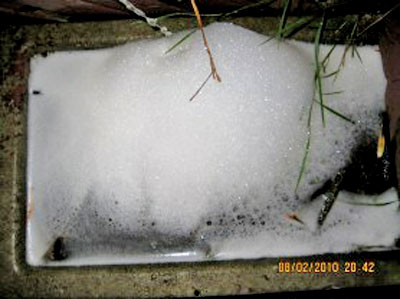
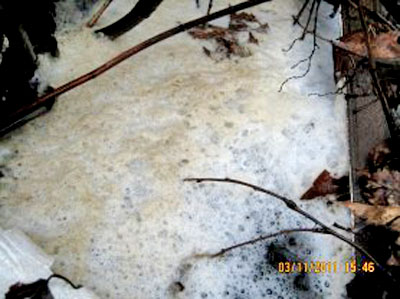
As the months went by I started to notice bubbles in the rain.

There were bubbles in puddles that would form in the streets, in my backyard, on the fence, etc. Where the rain would accumulate at the bottom of the drainage pipe at my home, the bubbles would seem to get 10 cm high sometimes.

Ottawa


Admittedly, I don’t know if this is related to the spraying but I wouldn’t be surprised.

If I had more money I would have had this stuff tested. In Ottawa, I had called a local testing laboratory and they were very surprised to hear about this. I was more surprised that I was the first, it seemed, that brought this to their attention. I moved from Ottawa to Halifax and I witnessed the same thing here.

Gwen Scott, who I refer to later on as well, mentions (in a 2005 documentary) that mortality from respiratory diseases went from being the 8th most leading cause of death in the USA to being the 3rd in a span of 5 years.

What else do we know? Aluminum is in the mix and has bad effects on your health. It is associated with Alzheimer’s disease. Is this why now some people as young as 26 years old are getting Alzheimer’s disease?

Barium is also a hallmark of this spraying, and tests mentioned in the documentary, “What in The World are They Spraying On Us?”, reveal very high levels of,

  • barium

  • strontium

  • aluminum

Fungus that is sprayed on us also eats the nutrients our body needs to regenerate our immune system.

Often when I would run out to take pictures I would get instant diarrhea. Sometimes, it would hit me like a wave as soon as I opened the door to my backyard.

Nowadays I seem to have developed somewhat of an immunity to it, but when I was first documenting this the diarrhea would be so bad I would sometimes go to the washroom 6 times a day.

Another noteworthy symptom is that I find it harder to breathe these days.

Others I know are having more difficulty breathing these days as well. I don’t think this is imagined for me and it’s probably less likely to be an imagined effect for those who weren’t even aware the spraying was going on.

Barium’s devastating effects happen to include breathing difficulties, increased blood pressure, heart rhythm changes, stomach irritation, muscle weakness, alterations in nerve reflexes, damage to your brain, liver, kidney and heart.

Around this time I would notice that I would often get too hot, take my shirt off, and then I would be almost instantly too cold and would put it back on again. This happened repeatedly and it seemed as though my body was often confused about whether or not it was too hot or cold. As the winter set in this annoying symptom went away.

I had heard that the chemtrails are sprayed less in the winter. I don’t know if that’s true, but as the winter ended, those strange hot/cold symptoms re-appeared.

Many farmers are also noting the decline in their yields. A farmer I know said that last month was the first time she had ever had greenbeans growing in her own garden in October in her entire life. A woman in landscaping even told me she was seeing certain plants flowering in times of the year that they normally wouldn’t.

Something is definitely throwing the balance of nature off. The video below features many farmers talking about their experiences with this.

I’ve taken some photos of trees in Halifax which I thought looked weird.

Halifax

I suspect they’re somehow affected by the aerosol operations too.

A few months after beginning to research this spraying, I experienced a 5.0 magnitude earthquake in Ottawa which was felt as far away as Boston.

I suspected it had been man-made because only a few hours later there was a tornado in southern Ontario.

When this technology is used, a common side effect is that it causes other weather anomalies in the area. Strange colored lights are also a telltale sign of the earthquake-weapon, and there were, in fact, strange lights like this seen in Toronto three days before the quake.

The quake itself was also 3 days before the G20 meeting.

There was also a loud high-pitched sound and strange lights in the sky in Victoria, B.C., Canada one day before the quake (and B.C. is right next to Alaska which hosts a couple H.A.A.R.P. facilities which can inflict earthquakes… more on that High Frequency Active Auroral Research Program later).

I took this earthquake as my cue to talk to my neighbors more and subsequently found out that they were having digestive problems, the source of which had remained a mystery for them. They had even been going to the doctor to get blood tests to try to figure it out. They had no idea that the chemtrails existed or might have contributed to their suffering.

They were very intrigued at the notion that the chemtrails might have been responsible.

It’s not a coincidence that genetically modified seeds are made to resist the aluminum they’re spraying our skies with. The social engineers seek to cut off all alternatives. They want us to buy all our food from them. They want to manage every aspect of our lives.

Accurately studying the harmful effects of these metals on us is made more troublesome by the fact that they can have synergistic effects. There are many things being sprayed and it’s hard to know how they all mix.

Sometimes I see a plane spraying a trail immediately behind another plane’s trail, almost like they’re trying to cook something up.


Healing Tips

Now that’s a lot of doom and gloom, and there’s more to come, but let’s pause for a moment to examine ways to heal yourself from the toxic effects of this cocktail.

Of course, do not take this advice if you are already on a pharmaceutical. Consult your doctor first if you are.

Anyway, Gwen Scott, N.D., seems to have a lot of knowledge on this subject and is featured in a fantastic documentary, Aerosol Crimes, which I highly recommend.

Some of what she says:

  • Essential fatty acids help to push aluminum out through your hair, believe it or not. Omega 3-6-9 oils are essential for brain function. Fatty acids also lower blood pressure. Apparently, good sources of essential fatty acids are flax seed oil, evening primrose oil, and krill oil.

  • Fluoride causes you to absorb more aluminum that you come into contact with and that aluminum can cross the blood-brain barrier, causing Alzheimer’s and short-term memory loss as mentioned earlier. Studies show a 5-15 point reduction in IQ associated with fluoridation. That might be one of the many reasons to stop drinking fluoride.

  • When aluminum ions and magnesium ions combine they clot the blood. A good blood thinner is ginger root (capsules) and ginko biloba, although do not take this if you are already taking a blood thinning medication/pharmaceutical.

  • For heavy metal removal you can use diatomaceous clay (make sure it is food grade). This all natural and binds itself to heavy metals to allow release through bowels.

  • Things that kill the fungus that is being sprayed on us: garlic, chinese mushrooms (particularly in extract form) like reishi, shiitake, and maitake. Caprylic acid and colloidal silver are also effective. Scott recommends colloidal silver nasal spray for sinus infections.

  • Barium is carcinogenic and knocks out all the potassium from your body, causing muscle weakness and heart palpitations (potassium supplements could be considered).

  • Gwen Scott wears a mask when she goes outside to block out the toxic soup we’re all walking in. She finds it dramatically reduces her symptoms.

I tried to confirm if barium was actually “carcinogenic”, as many trolls at online message boards were quick to refute that, and I came across this:

  • The Department of Health and Human Services

  • The International Agency for Research on Cancer

  • The Environmental Protection Agency (EPA),

…have not classified barium as to its human carcinogenicity.

Barium has not been classified because there are no studies in people and the two available animal studies were inadequate to determine whether or not barium causes cancer.

What I outlined here only scratches the surface.

Here is a very informative article that Gwen Scott wrote which expands on ways you can defend yourself from this crap.


Morgellons

This is not what I saw but it looks almost identical.

Possibly related – recently, on October 9th I witnessed something which I had been meaning to do more research on, but that I had not had a chance to look into yet.

I had heard that they were related to the chemtrails.

That was these “chemtrail web things”. I didn’t have my camera with me at the time, but what I saw was like a web, but much thicker than a spider’s web. It looked like glossy or shiny silly string with some parts that were slightly blueish. It looked almost melted like in this screenshot on the right, which I took from this person’s YouTube video.

As in that video, what I witnessed was also on the tip of the tree branch and also looked as though it could have been thrown on there. The person also said that this stuff would kill the trees it came into contact with and that insects would avoid it.

As I dug deeper I found something that shocked me. Many people were suffering from something called Morgellons.

Unfortunately, doctors would turn these people away, telling them they weren’t suffering anything and that they were delusional, more or less, and that this disease did not exist.

Two years ago Natural News reported,

The third theory is that Morgellons is an infection of nanotechnology. Several independent studies on Morgellons fibers taken from patients have shown that the fibers consist of both inorganic and unidentifiable materials.

One group of fibers was sent to a forensic scientist at the Tulsa Police Crime Lab in Oklahoma for analysis. After analyzing and cross-referencing the morgellons fiber with the FBI’s national database, it was found that it did not match any known fiber within the database.

Other studies claim that fibers can withstand temperatures of up to 1400 degrees Fahrenheit.

This “disease” is strange, to say the least. This is where the transhumanism comes in.

The President of the Morgellons Research Group, Kandy Griffin writes,

Morgellons is not a disease. It is a process. It is a form of forced/directed evolution of the human genome. It is the fetal stage of transhumanism, and it is upon us.

This stealth project is being carried out with the use of the daily chemtrail operations, which are happening globally. There is no escape. The chemtrail operations are terraforming the earth and everything on it, including you.

Many have died. While the CDC and Kaiser Permanente drag their heels with its so-called study, humans are perishing, suffering “unbelievable” symptoms and are left alone with nowhere to turn.

Countless patients have been improperly diagnosed with “Delusions of Parasitosis.”

Just before the “explosion” of Morgellons here in the United States, the CDC sent letters out to physicians across the country stating that they were seeing an increase of patients with DOP. Coincidence? I think not. They were covering their tracks, so to speak.

Last I knew, delusions do not cause oozing skin lesions, flying insects, worms, fungus, molds, plants, colored fibers and fiber bundles, polka-dotted, multi-colored plaques or crystals of different shapes/colors.

These are just a few of the symptoms associated with this mutation process, based on one’s genetic pre-disposition.

Depending on their size, these things can hurt when they come out and can feel like a small razor blade being pulled out of you.

The description for the next YouTube video mentions:

Is aerosol spraying only abou90experimenting with weather? What do the self-replicating fibres found in Morgellons patients signify? Why are engineered materials being found in airborne environmental samples?

All this suggests a planetary engineering program that is affecting and targeting all living things. Synthetic biology is science’s most exciting new frontier, combining genetics, robotics and nano-technology with artificial intelligence, hybridizing natural forms and engineering tissues beyond our wildest dreams.

The technology explosion is skyrocketing, and artificial intelligence will soon surpass our own capabilities. How will our world be organized then? Will we turn ourselves over to machines? Or will we have become technological hybrids ourselves?

I implore you to watch this in-depth presentation that goes into Morgellons in great detail.

If you watch nothing else here, watch the video below titled “The Dark Agenda of Synthetic Biology – From Chemtrails to Pseudo-Life”.

The woman presenting it, Sofia Smallstorm, is an expert on chemtrails, weather control and synthetic biology. The video even shows “crystals with embedded hexagons” and “strands that glitter”.

She calls attention to how some people have hair that glows and skin that strangely shimmers. As mentioned, there are also strange colored plaques coming out of peoples’ bodies. Some of them have fibers coming out of them. She mentions that one of the hexagons found once grew a fiber in 20 seconds while someone was looking at it under a microscope.

Particularly creepy, we apparently are all infected with this, but only some people show outward symptoms and are not able to fight it, typically due to genetic predisposition and a variety of other factors including the strength of one’s immune system.

Near the end of the presentation (at 0:53:20), Smallstorm says:

You have seen, today, the deposition and active presence of artificial materials in the sky, environment, and in living things. Nano-technology has arrived at our personal doorstep without our permission. It isn’t that this will happen in 2045 – it’s already here.

Human enhancement is being sold to us as leaping tall buildings in a single bound and having better thought, faster, higher intelligence, perfect health, but all of that is the sales pitch.

Enhancement may in fact be degradation – our being devolved to someone else’s specifications. While nano-biotechnology promises, in headlines, to make our world better, it may in fact be busy taking us over so it can tailor us to the plan for the hive.

Already transhumanists are looking forward to the creation of the ‘post-human’, an ‘improved’ human that will have no gender, will not reproduce, will be a better performer in the workplace, will not be distracted by love or lust, will be free of disease thanks to these nano-bots keeping it healthy, but all this is part of the fantasy.

In reality, thanks to stressers on our physiology, infertility is soaring, our sexuality is diversifying and the nuclear family is falling apart. Biotech is an exploding frontier. It is clever enough and small enough to enter and change our very cells.

New forms of DNA have been invented. There’s GNA, as I told you about, and PNA – a hybrid of protein and DNA – that will add to our double helix a third strand.

When nano-biotech has a firm footing in us, it will be easy to upgrade and downgrade anyone and anything in any way.

Oliver Curry an evolutionist at the London School of Economics predicted in 2007,

‘The human race will one day split into two separate species – an attractive intelligent ruling elite and an underclass of dimwitted, ugly, goblin-like creatures’…

Transhumans will presumably be involved in this process, the process of transformation, the process of renovation – remaking us into what someone considers “improved”.

We are transhumans now. “Improved” is only what fits certain specifications.

For instance, a specimen that can work 18 hours a day, a specimen that is sterile, that will never have the responsibility of caring for others, a specimen that is even tempered, with a narrow, predictable range of expression – all this is ‘enhanced’, ‘improved’.

Better performance is just that, the ability to produce a better result. It does not mean a specimen with greater skills. It may mean a specimen with narrower skills and the ability to repeat a task.

So while the current ethical debate is about whether or not we should upload computers into our brains and how human we will be when that happens there is something happening on the nano-scale right now. What it is, exactly, is unknown to us as attempts by lay-people to communicate with scientists about Morgellons-type materials are going nowhere.

There is a blackout on this subject. Its victims are dismissed as having a psychological problem that is called ‘delusional parasitosis’.

The presence of patented creations in our bodies gives rise to intellectual property issues.

We know what has been done to small farmers into whose fields the winds have brought genetically engineered strains. They are sued by the powerful agricultural companies who own the patents. Will the day come when we are subjected to the jurisdiction of corporations whose patented materials we are carrying in our bodies?

It doesn’t matter how it got there. The fault is your if it is simply in your possession.

This is a forced partnership between us and them. This is how we will be eternally owned by them. This is how they can push our biology from homo sapiens to homo evolutis without our having a say in it.

For now, engineered technology in all living things is a secret, but one day we may be charged with unlawful possession of something that has become a part of us that we cannot get rid of.

The nature of biology is to adapt. As more unnatural elements enter our bodies, if we cannot reject them, we will find ways to accommodate them…

We are living, walking laboratories for powerful science in a society of increasing control. We are being altered.

The future being spoken of is happening now.

Electromagnetic Waves and HAARP

There is a man discussed in a Voltaire Net article who may have been involved in the creation of Morgellons “or a rare, mutated form of Morgellons disease”. The article states that it is alleged that this Israeli scientist named Moshe has connections to the Mossad.

Interestingly enough, the article mentions that at one point he was being chased by the,

”LA police department and SWAT team, assisted by the FBI, Secret Service, CIA, U.S. Army and several unidentified federal officials.”

Moshe’s car was,

“reportedly knocked out by an electromagnetic pulse”.

What? Knocked out his car with an electromagnetic pulse?

Hopefully that didn’t cause the same kinds of problems that it recently did in Spain:

…the local police force used some high tech device from the police station that caused most all electronic items within 500 meters of the police station to be knocked out for about one hour.

The Police told the locals it was a safety wave.

This safety wave effect lasted for about one hour in the early morning times while the Helicopter flew in and about one hour later flew out. The effects were no mobile phones in that 500 meter radius of the police station would work.

No cars within that field effect could be made to start their engines. All other cars outside the region were not allowed to enter this safety wave region so it’s not known if they can knock out engines that were running at the time of the safety wave event.

All satellite TV and cable TV devices in the safety wave region were knocked out also. We are talking a region festooned with multi story apartment blocks with hundreds if not thousands of normal Spanish going about their normal lives unaware that there was some sort of test of a safety wave device about to be given to them.

There seems to have been other unconfirmed issues suggesting pace makers and other medical devices were effected both within the safety wave region and possibly further than the safety wave field.

There seemed to have been a local spike in death rates that day and for several days it was rumored that the local funeral homes had a spike in burials.

This would be a great time to start talking about the earthquake weapon.

You see, not only would there be planes leaving these heavy metals, salts, and strange fibers, etc., but I noticed that the clouds and/or “clouds” would exhibit a strange sand-like wavy effect like in this video.

It almost looks like a square in the sky.

I’ve since tried to document as much of this type of thing as possible on video.

This next video features a bunch of this shot in time-lapse mode but also included is one of the most intense electrical storms I’ve ever seen. There was no rainfall and almost no thunder during this storm.

Looking into this I found out the phenomenon is called scalar electromagnetic waves.

My research into chemtrails naturally led me to discover HAARP, a “research project” that the US military conducts involving concentrating energy into a beam used to heat the ionosphere.

Chemtrails can be used in conjunction with this as a way to bounce energy off of the ionosphere, using it as a mirror of sorts.

Prior to that, Dr. Brooks Agnew was using this technology on a smaller scale to search for oil and gas, a process called earth tomography. This technology would even be able to tell you the quality of the oil found.

I’ve since discovered that at present, many countries around the world have this technology. Its applications include weather-modification, mind-control, causing earthquakes, detecting oil or underground bunkers, over-the-horizon radar, projecting holograms, beaming sound into your head, giving you diarrhea, targeting specific organs, affecting your mood or giving you insomnia, etc.

All this was impressive and chilling, to say the least.

There is information out there which strongly suggests that HAARP or technologies like it are directly responsible for the malicious infliction of an earthquake on,

  • Haiti

  • China (lights 30 min prior to earthquake, 10 min prior)

  • New Zealand

  • Chile

  • Japan’s recent mega-disaster,

…as strange rainbow-ish tinges, almost like northern lights, are seen preceding those earthquakes and are generally associated with this negligent tampering. Hurricane Katrina is also a good candidate.

See the documentary on the subject, titled Holes In Heaven

The Dark Side

Unfortunately, the military applications of this technology seem wholeheartedly reckless or sinister or both.

The father of this technology, Nikola Tesla, warned that if you hit the earth with enough energy at a certain point, it will split in two. This shouldn’t be surprising, considering martial artists can kill by applying pressure at specific points on the human body, and also considering that the Earth is an organism.

We should be brave regarding the challenges that await us.

Yes, a solar flare might cause 200 Fukushima-style meltdowns if we are short-sighted and nothing is done to humor alternative and more sane ways of harvesting nuclear energy – ways which might not kiss the weapon industry’s behind – and yes, Morgellons is frightening… but at least we know about this and other threats.

It’s better than not knowing and at least the Internet is not dead yet.

Let’s get back to barium at this point.

This video below explains that barium also happens to be an ingredient used in Project Blue Beam, which is a government program that intends to project holographic images of deities descending down to major cities around the world, all of this coinciding with audio being beamed into the heads of the populations in a massive theatrical psy-op.

An alien invasion hoax scenario has also been considered. Recent sightings/footage of a “mirage” in China might indicate further experimentation in this field. Yes, you read that correctly – footage.

They actually took pictures and video of this “mirage” and it looks like a picture-perfect city floating on water, all highly detailed.


The Bright Side

Interestingly enough, I knew someone who monitored the weather and solar flares intensely.

One time he told me and my girlfriend,

“In three days there’s going to be a massive solar flare so watch out for your dreams to get vivid and crazy”, and sure enough, the dreams we both had were intensely vivid.

If the arrangements of planets in our solar system affects our minds, moods, and psychology, then why shouldn’t the arrangement of some other “physical” stuff, like a star spitting at us, do the same?

Some people like Dieter Broers even go so far as to say:

I am convinced that we are currently in the midst of a process involving the restructuring of our neuronal networks, and that the catalyst of this process is the high solar-geomagnetic activity whose consequences are feared by so many people today.

However, all facts and findings add up to the undeniable conclusion that this evolution will for the first time in human history enable us human beings to use the enormous potential of our brains.

He goes on to say:

The events the cosmos has in store for us in 2012 can be compared to the effect of being handed a glass of juice into which someone has slipped some LSD without our knowledge.

Such unanticipated altered states of consciousness have certainly occurred at other junctures in human history.

For example, sudden outbreaks of hysteria provoked by hallucinations occurred regularly during the Middle Ages. Those affected were unaware that the bread they were eating contained ergot, whose active ingredient Albert Hofmann used to make LSD many years later.

Inasmuch as the hallucinogenic effects of bread containing ergot were unknown at the time, those affected could only conclude that their altered mental state was a serious illness.

I can only speculate as to whether or not the aerosol campaigns and diminishing sunlight represent, at least in part, an effort to suppress this incoming flood of consciousness expanding space-stuff.

Far from simply waiting for the sun to give us a nice trip and insights, Broers uses this understanding for good:

…so-called hopeless patients have been successfully treated using the effects of solar-geomagnetic fields on the mind, perception and consciousness. This megawave therapy, as it is called, consists in the administration of electromagnetic fields that are identical to those found in nature.

This therapy has achieved exceptionally high cure rates by virtue of the fact that for the first time the patients understand the cause of their disorder. Hence this therapy is closely bound up with a catalyzed process of consciousness, and does not at all involve a crude mechanistic procedure.

Dieter Broers is definitely not oblivious to the harmful effects of this technology when used in a bad way.

Nor is Nick Begich – the expert who has brought so many of the crucial points of caution to light – going to resist mentioning that HAARP could have the ability to cause chemical reactions in the atmosphere and thus replenish ozone, if indeed that is a problem up there:

An application developed by Dr. Bernard Eastlund, the inventor of the original HAARP technology, is the combination HAARP technology with a fusion torch, which can be used for burning low-level radioactive waste and neutralizing that waste while producing energy from it. That’s an interesting environmental technology.

He thought about the HAARP technology being used for replenishing ozone in the upper atmosphere and for decreasing pollutants by accessing the resident frequencies that would generate and create chemical reactions in the upper atmosphere.

Getting rid of air pollution by using this kind of system is an incredible application!

Finally, Daniel Pinchbeck’s book, 2012 – The Return Of Quetzalcoatl (2006, p.103) touches upon an interesting perspective with respect to all this.

Writing about Terrence McKenna, Pinchbeck notes,

He supported ‘the siren song of Pythagoras’ that the mind is more powerful than any imaginable particle accelerator, more sensitive than any radio receiver or the largest optical telescope, more complete in its grasp of information than any computer: that the human body – its organs, its voice, its power of locomotion, and its imagination – is a more-than-sufficient means for the exploration of any place, time, or energy level in the universe.’

I must admit that I tend to agree with Terrence on this one…

Source

SCIENTIFIC STUDY OF THE MORGELLONS CONDITION

Little study of Morgellons condition:

SCIENTIFIC STUDY OF THE MORGELLONS CONDITION

Carnicom Institute is embarking on a first of its kind study of the Morgellons condition. Through the systematic collection of physiological data, this study aims to identify measurable characteristics of this illness. Carnicom Institute is currently seeking individuals who are willing to participate in this study. Those participating in the study will be the source of the data that is needed for our research.

If you would like to participate in this groundbreaking project, please make contact with the Carnicom Institute at info@carnicominstitute.org.

The research involves the systematic collection of physiological data from individuals in three groups. The first group of individuals will demonstrate external visual characteristics thought to be representative of the Morgellons condition.  The second group will be a control group of essentially random individuals in self-described good health. Common physiological measurements from both groups will be analyzed to identify if significant differences exist between the two groups.  A third group of individuals will then be studied. These individuals will show or claim physiological signs associated with the Morgellons condition, without the presence of the external skin manifestations.  Results from the third group will then be analyzed for any commonality or differences.  All candidates for the project will be requested to provide physiological information, which includes laboratory tests results, temperature/pH logs, a health questionnaire, and documentation of an oral filament test (red wine test).

Group I will demonstrate visible skin manifestations thought to be representative of the Morgellons condition. These criteria include the presence of unique filaments within or on the body, a presence of skin lesions that resist healing, and the production of an oral filament sample (red wine test). Individuals that participate in Group I will be required to provide sufficient and ample photographic documentation that meets the criteria listed above.  Laboratory costs for Group I will be paid for in total by donations to the Institute.

Representative Skin Lesions of the Morgellons Condition

Source: www.carnicominstitute.org

Representative Skin Filaments of the Morgellons Condition


Source: www.carnicominstitute.org

Representative Oral Filament Samples
(Results of Red Wine Test)

Group II is a group of essentially healthy individuals selected at random that will serve as a control group.  It is vitally important that the Carnicom Institute is able to enlist the assistance of a satisfactory number of healthy individuals without evidence of the Morgellon’s Condition.  It is apparent that patients with the Morgellon’s Condition are critically dependent upon obtaining the help of their fellow human beings. This is particularly true if they are to benefit from an evaluation of the scientific data obtained from this research project which will not be available unless an appropriate control group can be designated and evaluated. Eligible individuals will be persons of good will who are willing to help in the completion of this important study in the hopes of benefitting their fellow human beings. Laboratory costs for Group II will be paid for in total by donations to the Institute. If you believe that you are a candidate for this group please contact us promptly and express this interest to the Institute.

Group III will show representative physiological characteristics thought to be associated with the Morgellons condition, without the presence of skin lesions and/filaments.  Participants in Group III will be responsible for the costs of the laboratory testing, pending future donations to the Institute.

All participants will be evaluated, in part, with respect to the following list of physiological. signs; the list is not intended to be all-inclusive.

Significant oral filament production (red wine test)

Unusual or extreme dental issues

Chronic itching, stinging, crawling, or biting sensations of the skin

Dark particles emerging from skin or scalp

Hair alterations, i.e., texture, thickness, loss of hair

Neurological impairment, i.e., blurred vision or “floaters” in the eye, slurred speech, ringing of the ears (tinnitus), loss of coordination, loss of strength

Cognitive impairment, i.e., mental confusion, inability to concentrate, short term memory loss, “brain fog”

Extended or Chronic Fatigue

Joint pain

Gastro-intestinal imbalance

Specific blood abnormalities

At this time, individuals within Group III will be responsible for the costs of their own laboratory testing.  Funding for this group could eventually be provided, pending the status of donations to Carnicom Institute.

Laboratory test results for all individuals, within all groups, will be confidentially available to the participants. This study will be conducted in an anonymous and confidential manner for research purposes only. There will be no medical diagnosis or individual interpretation given. The study is for scientific purposes only and the knowledge obtained will be for the public benefit. One end result will be a statistical, observational, and functional health assessment based upon these sample groups.

This study will not be possible without the public’s participation and support. We believe that a greater understanding of the Morgellons condition is vital, and must be accomplished for the benefit of us all. Honest and legitimate scientific research is what we are offering to you. We hope that you will offer us your help.

Disclaimer: The Carnicom Institute is an educational and research organization. We serve the public welfare. We do not advocate any particular products, protocols, or therapies related to health or environmental safeguard. It is up to the audience to make an educated decision on how to use the information that is presented. Any presentation, opinion, or expression by any representative of the Carnicom Institute or outside affiliation in no way implies or denotes endorsement by the Institute. The Institute is not affiliated with any political or religious groups.

The Institute claims the exclusive right to publish all information, materials, and photographs that are submitted to this organization and these materials will not be returned.

If you would like to participate in this groundbreaking project, please make contact with the Carnicom Institute at info@carnicominstitute.org.

Source

CDC Calls Morgellons’ Nanoworms a Delusion – Protects DARPA

Some info about Morgellons:

Imagine having the mental prowess to be able to create living filaments heretofore unknown, that can reproduce themselves, some of which come with identifying letters embossed on them, and then to make them extrude from beneath your skin, all against your conscious will.

Sound like science fiction? It’s not, says the US Centers for Disease Control (CDC).

Despite having spent four years and $600,000, and using the world’s largest forensic database, the premier health agency reports it is unable to identify the source of the fibers emanating from those suffering with Morgellons. [1]

The CDC suggests that four out of a hundred thousand people – the rate of infection in Northern California – are imagining these filaments into existence.

Comprising an array of physical and mental symptoms [2], Morgellons is distinguished by novel fibers that protrude from the skin, causing lesions and sores that do not heal, or that heal very slowly.

“We conducted an investigation of this unexplained dermopathy to characterize the clinical and epidemiologic features and explore potential etiologies,” the paper explains.

The only potential etiology suggested was that the patients were delusional:

No common underlying medical condition or infectious source was identified, similar to more commonly recognized conditions such as delusional infestation.

The CDC provided more information in its press releases [3] hyping the study than it did in the 300-word study published last week.

Its Unexplained Dermopathy webpage goes beyond what was reported in the actual study, saying there is “no evidence of an environmental link,” and promised to do no further studies. [4]

“People who suffer from Morgellons disease are NOT delusional no matter what the CDC or the mainstream press would have you believe,” says Jan Smith of MorgellonsExposed.com.

She’s suffered with Morgellons for over 13 years.


The image above is on her home page.

“Ponder why a person with Morgellons disease would have tissue coming out of their body with embossed letters on it. This photo (above) is real and the sample has not been altered in any way. It is available for research and DNA testing.” [5]

The CDC study reported,

“Most materials collected from participants’ skin were composed of cellulose, likely of cotton origin.”

One of the specimens extruded from Smith’s body was found to be composed of cellulose and GNA, the synthetic form of DNA. [6] Glycol nucleic acid does not occur naturally; it is used to create synthetic life forms. [7]

But why would the CDC not know exactly the origin of the cellulose, instead saying it’s likely from cotton? And what about the rest that was not cellulose? The study provided no details.

The CDC sent the cellulose and unnatural fibers to the Armed Forces Institute of Pathology (AFIP), reports the Associated Press. [8] AFIP has been collecting fiber samples and other forensic material for 150 years. [9] Its 2011 budget was $65 million. [10]

Surely, if these novel fibers are natural or lab-created, the AFIP would know. Apparently not.

AFIP is the same group that collected all the forensic evidence of the 9/11 attack on the Pentagon and at the Pennsylvania crash site, under code name Operation Noble Eagle. [11]

The Center for the Investigation of Morgellons Disease, headed by Dr. Randy Wymore, was also unable to identify the fibers.

The Oklahoma State University research center had the forensics team of the Tulsa Police Dept. compare samples to its database of 800 fibers and 90,000 organic compounds, without success, reports Natural News writer Barbara Minton. [12]

Though Wymore did not respond to my request for comment in reaction to the new CDC study, the Center’s home page still maintains that Morgellons,

“is frequently misdiagnosed as Delusional Parasitosis or an Obsessive Picking Disorder.” [2]


What is the CDC hiding about Morgellons?

What the CDC didn’t say in the public report is that those fibers are alive and motile.

They grow and reproduce, and have been shown to do so in a petri dish using certain visible light frequencies. If delusions are creating them, that would be a first in human evolution.

Research conducted by Cliff Carnicom indicates that the still-unidentified fibers seen in Morgellons patients are the same as those collected after an aerial spray of chemtrails. [13]

After being cultured for five days, the fibers produced a sheen across the wine medium, right before explosively reproducing hundreds of new fibers in a 24-hour period. [14]

He later explored how these nano-worms feed on the iron in human blood, explaining that,

“changes in iron and the utilization of iron in a pathogenic sense are at the heart of the Morgellons issue.” [15]

An arduous course of research led Carnicom to conclude that the nanoworms present in Morgellons patients represent an entirely new life form, and one that was engineered using features from each of the three Domains of life:

  • Bacteria

  • Archaea

  • Eukarya [16]

To bolster his argument, he refers to a Feb. 2010 disclosure by the Defense Advanced Research Projects Agency (DARPA),

“to develop immortal ‘synthetic organisms’, as outlined in the unclassified version of the 2011 budget,” citing Wired.com:

As part of its budget for the next year, DARPA is investing $6 million into a project called BioDesign, with the goal of eliminating ‘the randomness of natural evolutionary advancement.’

“… The project comes as DARPA also plans to throw $20 million into a new synthetic biology program, and $7.5 million into ‘increasing by several decades the speed with which we sequence, analyze and functionally edit cellular genomes.” [17]

If these unidentified fibers are some sort of top-secret nanotech military weapon, that would explain why no answer and no help will come from the CDC or the military.

Using Carnicom’s research, and others, documentarian Sofia Smallstorm (9/11 Mysteries) raised a singularly spectacular question at a speech last year:

Is it possible that Morgellons sufferers are those whose bodies are genetically rejecting these nano-engineered life forms, while our bodies are integrating them? [6]

That question must be noodling the brains over at the CDC and DARPA.

They must be wondering what is different about those 4 in 100,000 people whose bodies reject these synthetic life forms. The report they didn’t reveal to the public is the one I want to read.

We do know that back in 2006, the National Institutes of Health listed Morgellons as a genetically caused disease, due to the presence of three copies of a chromosome rather than the normal two (known as trisomy).

This was found at the 5S rRNA genes located on chromosome 1, in the q42.11 to q42.12 region, according to the following screen capture by Jan Smith, who explains that a year later NIH deleted the webpage (click below image): [18]

Trisomy can result in mental retardation and physical deformities. [19]

  • Are these bioengineered life forms causing rRNA to produce a third copy of chromosome 1 at q42.11 to q42.12?

  • Or, do Morgellons sufferers already have a third copy, and its presence is somehow forcing the nano-worms to leave the body?

Several people agree with Carnicom that these living fibers are being sprayed on us via the vociferously denied chemtrail program.

Morgellons patient Kandy Griffin, president of Morgellons Research Group, puts it right out there:

Morgellons is not a disease. It is a process. It is a form of forced/directed evolution of the human genome. It is the fetal stage of transhumanism, and it is upon us.

This stealth project is being carried out with the use of the daily chemtrail operations, which are happening globally. There is no escape. The chemtrail operations are terraforming the earth and everything on it, including you. [20]

There is hope.

In the last section of Carnicom’s Thesis, he suggests several mitigation strategies that would apply equally to those who develop Morgellons and those who don’t, but who are likely assimilating rather than rejecting these bioengineered life forms. [15]

Notes

[1] Pearson ML, Selby JV, Katz KA, Cantrell V, Braden CR, et al. (2012) “Clinical, Epidemiologic, Histopathologic and Molecular Features of an Unexplained Dermopathy.” PLoS ONE 7(1): e29908. doi:10.1371/journal.pone.0029908. Available at http://www.plosone.org/article/info%3Adoi%2F10.1371%2Fjournal.pone.0029908
[2] Oklahoma State University Center for the Investigation of Morgellons Disease homepage http://www.healthsciences.okstate.edu/morgellons/index.cfm
See also: Randy S. Wymore and Rhonda Casey, “Morgellons Disease” (Joint Statement to the medical community), Oklahoma State University Center for Health Sciences, Tulsa, 15 May 2006. http://www.healthsciences.okstate.edu/morgellons/Joint%20Statement_4.pdf
Wymore, “A position statement from Randy S. Wymore on the topic of Morgellons Disease and other Morgellons-related issues,” 19 June 2007. http://www.healthsciences.okstate.edu/morgellons/docs/Wymore-position-statement-2-19-07.pdf
[3] Centers for Disease Control and Prevention, “CDC to launch study on unexplained illness,” 16 Jan. 2008. http://www.cdc.gov/media/pressrel/2008/r080116.htm
See also: Managing Infection Control, “Infection Focus: Morgellons; CDC to launch study on unexplained illness,” March 2008. Reproduced at http://healthvie.com/wp-admin/Articles/mic0308w52.pdf
[4] Centers for Disease Control and Prevention, “CDC Study of an Unexplained Dermopathy,” 25 Jan. 2012. http://www.cdc.gov/unexplaineddermopathy/
[5] Jan Smith, Morgellons Exposed, n.d. http://www.morgellonsexposed.com/
[6] Sofia Smallstorm, “From Chemtrails to Pseudo-Life: The Dark Agenda of Synthetic Biology,” speech at Conspiracy Con 2011, 4 June 2011, Santa Clara, California.
[7] Science 2.0, “GNA: DNA’s Chemical Cousin Is a Nanotechnology Building Block,” 28 April 2008. http://www.science20.com/news_releases/gna_dnas_chemical_cousin_is_a_nanotechnology_building_block
[8] Mike Stobbe, “Study of freakish mystery illness finds no cause,” Associated Press, 26 Jan. 2012. http://news.yahoo.com/study-freakish-mystery-illness-finds-no-cause-220159892.html
[9] U.S. National Library of Medicine, “Historic Medical Sites: Armed Forces Institute of Pathology,” 2 March 2004 (rev. 3 Aug. 2011), National Institutes of Health. http://www.nlm.nih.gov/hmd/medtour/afip.html
[10] Comptroller, Office of the Under Secretary of Defense, “Defense Health Program Operation and Maintenance Fiscal Year (FY) 2011 Budget Estimated Consolidated Health Support.” Vol I, Sec 5-C, OP-5, CHS, 11PB, DHP, Exhibit OP-5. p.3. Available at http://comptroller.defense.gov/defbudget/fy2011/budget_justification/pdfs/09_Defense_Health_Program/VOL_1/Vol_I_Sec_5-C_OP-5_CHS_11PB_DHP.pdf
[11] Armed Forces Institute of Pathology, The AFIP Letter, Vol. 159, No. 5, Oct. 2001. Reproduced at http://www.american-buddha.com/operationnobleeagleAFIP.pdf
[12] Barbara L. Minton, “Morgellons: Terrifying New Disease Reaching Pandemic Status,” Natural News, 3 Mar 2009. http://www.naturalnews.com/025757.html#ixzz1NacD5b3d
[13] Clifford E Carnicom, “The Biggest Crime of All Time, Confirmed: Environmental Filament Matched to Morgellons Condition,” 1 March 2011. http://www.carnicom.com/bio2011-2.htm
[14] Carnicom, “A New Form: Frequency Induced Disease?” 8 March 2011. http://www.carnicom.com/bio2011-3.htm
[15] Carnicom, “Morgellons – A Thesis,” 15 Oct. 2011 (rev. 1 Dec. 2011)
[16] Carnicom, “Morgellons: A New Classification,” 3 Feb. 2010 (rev. 11 Feb. 2010) http://www.carnicominstitute.org/articles/morgobs8.htm
[17] Katie Drummond, “Pentagon Looks to Breed Immortal ‘Synthetic Organisms,’ Molecular Kill-Switch Included,” 5 Feb. 2010.
[18] Jan Smith, “The Hidden NIH Webpage: NIH Website Lists Chromosome 1q42 Responsible for Morgellons Disease,” 18 Jan. 2008. See also: Sorensen PD, Lomholt B, Frederiksen S, Tommerup N, “Fine mapping of human 5S rRNA genes to chromosome 1q42.11–q42.13,” (1991). Cytogenet. Cell Genet. (1991); 1(57): 26-9. Abstract available at http://www.gene-profiles.org/pub/fine-mapping-of-human-5s-rrna-genes-to-chromosome-1q4211—-q4213
[19] March of Dimes, Chromosomal abnormalities, Dec. 2009. http://www.marchofdimes.com/baby/birthdefects_chromosomal.html
[20] Kandy Griffin, “Morgellons is not a disease,” 7 Aug. 2011. Many videos and other sources at: Amir Alwani, “If Chemtrails And HAARP Didn’t Disturb You Enough, Wait Until You Hear About Morgellons,” 21 Nov. 2011.

Read more of Carnicom’s papers.

Source